

Contents
Ready to simplify, scale, and grow?
Subscribe to get the latest workforce management and payroll news in your inbox.
Employee onboarding is inherently time-consuming. From administrative tasks to role-specific training, the job of preparing a new employee to work can quickly absorb your HR and payroll team’s time.
Paperwork, policy sign-off, and document capture can take hours, and become a bottleneck if you’re trying to scale up a seasonal workforce quickly.
However, with a streamlined digital onboarding process in place, you can reduce your onboarding costs and quickly move your new workers from hired to rostered.
Let’s explore seven ways to speed up employee onboarding:
- Adopt a single platform for employee onboarding.
- Enable self-service registration.
- Automate compliance document collection.
- Facilitate digital sign-off on your policies and procedures.
- Automate VEVO checks.
- Use bulk and template-based rostering.
- Integrate communications.
1. Adopt a single platform for employee onboarding
By consolidating onboarding, rostering, and payroll into one platform, you’ll eliminate the need for multiple systems and integrations. This reduces manual data entry when you set up a new employee and avoids errors caused by broken integrations.
Using a single workforce management platform will ensure that all of your employee onboarding data is captured in one place, making it readily available for the right people and processes.
Using foundU, you can also manage user permissions to control what each person can see and do with onboarded employee data. Onboarding tasks, such as assigning positions with the right pay rates and validating work rights can then be managed seamlessly, speeding up the entire process.
2. Enable self-service registration
Using digital employee onboarding, you can enable candidates to self-register via a convenient online platform. This allows applicants to enter their personal information directly into your database themselves, reducing administrative workload and accelerating the initial onboarding steps. 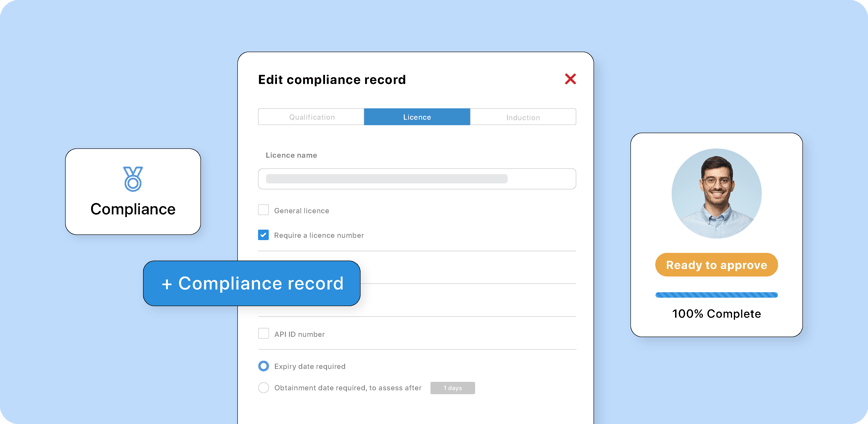
3. Automate compliance document collection
Using a configurable onboarding journey, you can ensure that your process is set up to capture and track mandatory compliance items. Think, health questionnaires, work rights, and licenses. Making essential fields mandatory also stops new recruits from skipping steps in their onboarding journey. Managers can then receive the information via your digital onboarding platform, check that it is complete, and then approve it so that you have a pool of candidates ready to roster on.
Adding tags for employees with particular skills or qualifications will also help you find the best-fit personnel for upcoming shifts quickly. Setting up notifications for expiring documents will also help you keep employee information current.
4. Facilitate digital sign-off on your policies and procedures
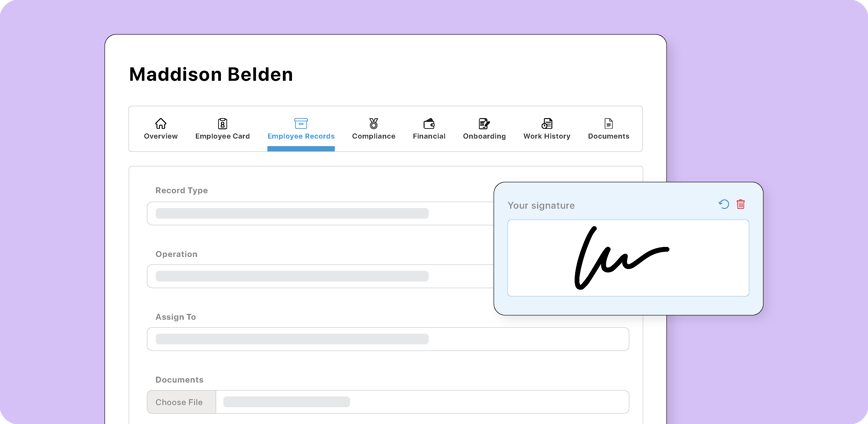
Policy and procedure sign-off does not need to be paper-based. When you go digital, you make it easier for new starters to sign, and they receive this essential onboarding information instantaneously.
This reduces wait times for your administrative team during the onboarding process.
5. Automate VEVO checks
If you hire many employees who are Visa Holders, then checking work rights can quickly consume your time. Using a direct integration with the Department of Home Affairs, you can automate visa checks and run them in bulk, saving time while improving compliance.
6. Use bulk and template-based rostering
Being able to copy previous rosters, bulk-create shifts, and use templates will also reduce the time required to set up new starters and create recurring shifts.
You can speed up shift creation for newly onboarded employees by copying a previous roster and altering times as needed before publishing. Shift offers can then be sent in bulk to your new starters, straight from the roster.
7. Integrate communications
Using a centralised workforce management platform, you can centralise communication about onboarding, shift offers, and availability. Admins and recruiters can then message new job candidates directly from within the platform, reducing their reliance on external SMS, emails, or spreadsheets. Notifications for schedule changes, contract signing, and onboarding progress will keep everyone informed and reduce delays.
A dedicated employee app can also be used to help your new hires self-serve throughout their onboarding. Once they download it, they can complete their right to work checks, sign employment contracts, provide pay information, and update their availability. Empowering them to complete these steps from anywhere with a mobile device will speed up the process.
Creating an efficient employee onboarding workflow
If you’re spending too much time on manual employee onboarding processes, now is the time to go digital. Select a platform that lets you configure the digital onboarding process to suit your workflows and scale up your workforce faster. If you make the switch to foundU, you can streamline the entire process and onboard as many candidates as you want, as you’ll only be charged for employees who are entitled to be paid each period.
If you want to explore how foundU’s digital employee onboarding features can save your team time and improve compliance, then book a demo with one of our product experts.